First Steps
How the pieces move, checkmate, what a plan is.
29 lessons, free
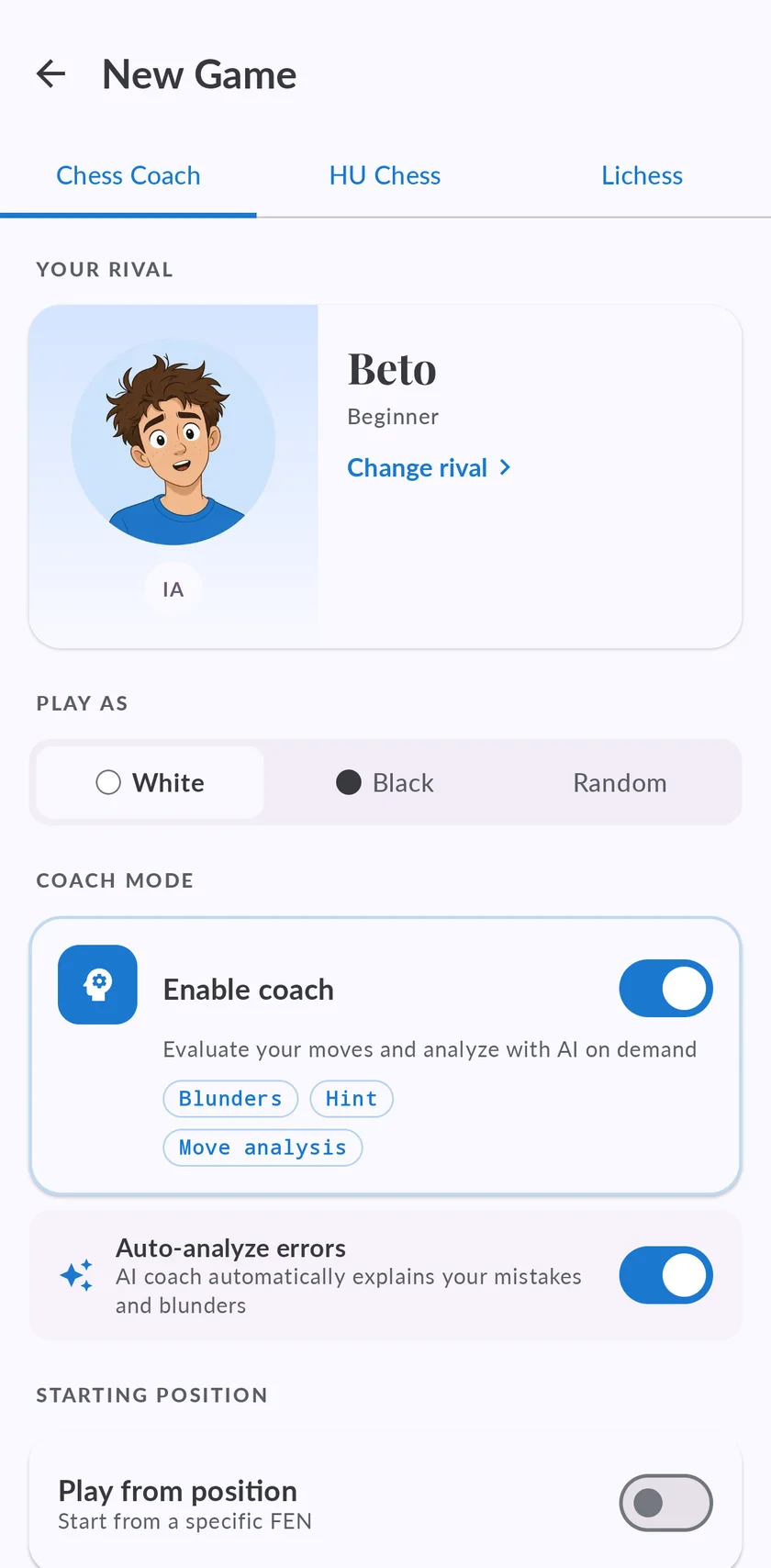
 Chess coach with AI
Play a game, then find out what actually went wrong. The engine in your pocket does the calculating. An AI coach turns it into a sentence you can use in the next game.
Free to start. iPhone, iPad and Android. No ads.
Taking on d5 opens the door to 6.Nxf7. Your king gets dragged out with the white queen and bishop already pointing at it.
Play 5…Na5 instead. It costs a pawn and keeps the king at home.
Any phone can run an engine stronger than any human alive. It shows you the move and a number. It never tells you what you walked into, and a number is not a lesson. CheesCoach keeps the engine and adds the part that was missing: a plain sentence about the idea you missed, written for your rating.
“We're entering the endgame. King activity matters more than material now: walk him to the centre before you push anything.”
An actual comment, from an actual game review
Finish a game and CheesCoach runs it through the engine on your phone, marks the moves that cost you something, and comments them one by one as you step through. Bring games in from Lichess or paste any PGN.
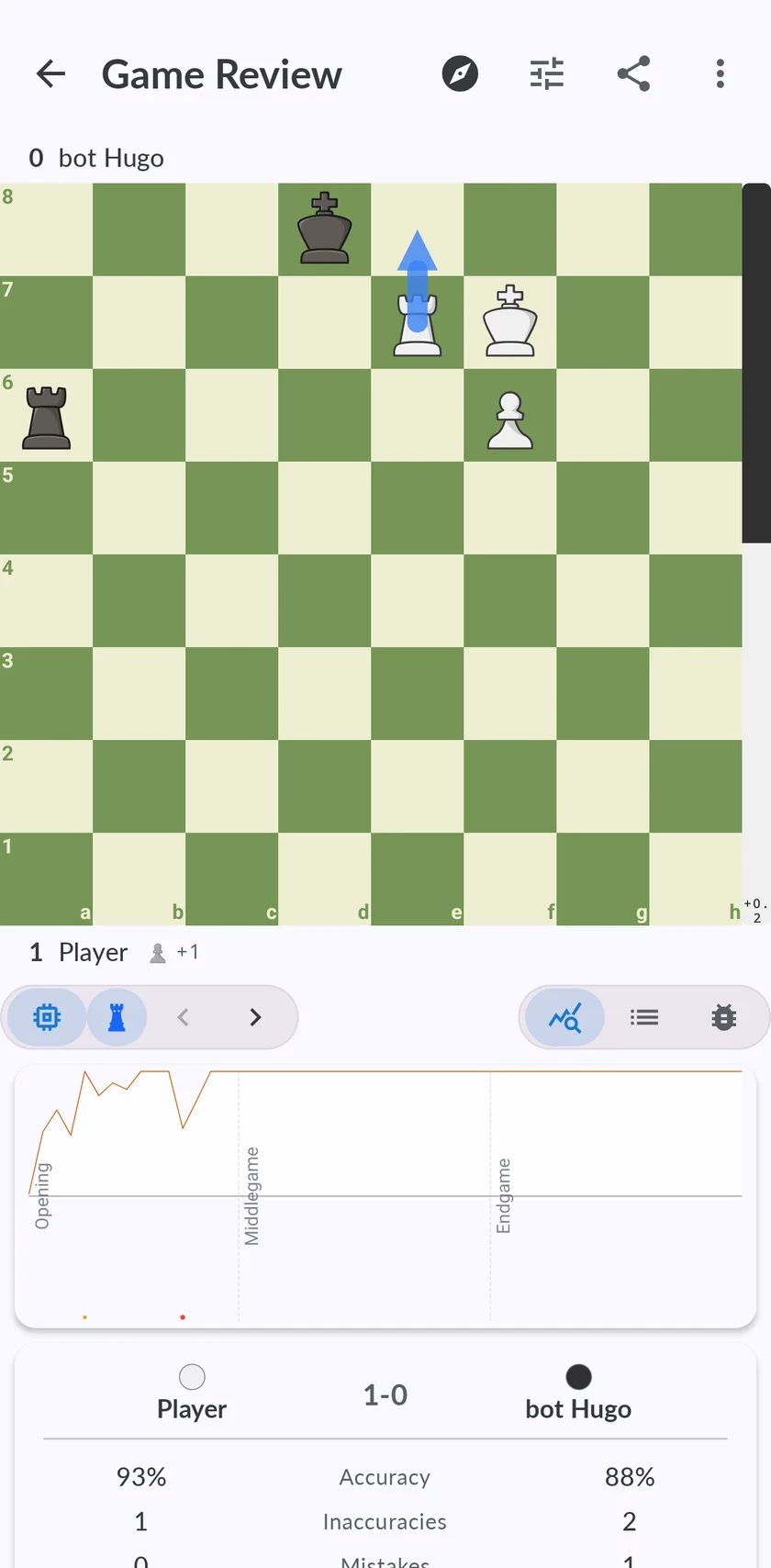
Accuracy, mistakes and where the game turned
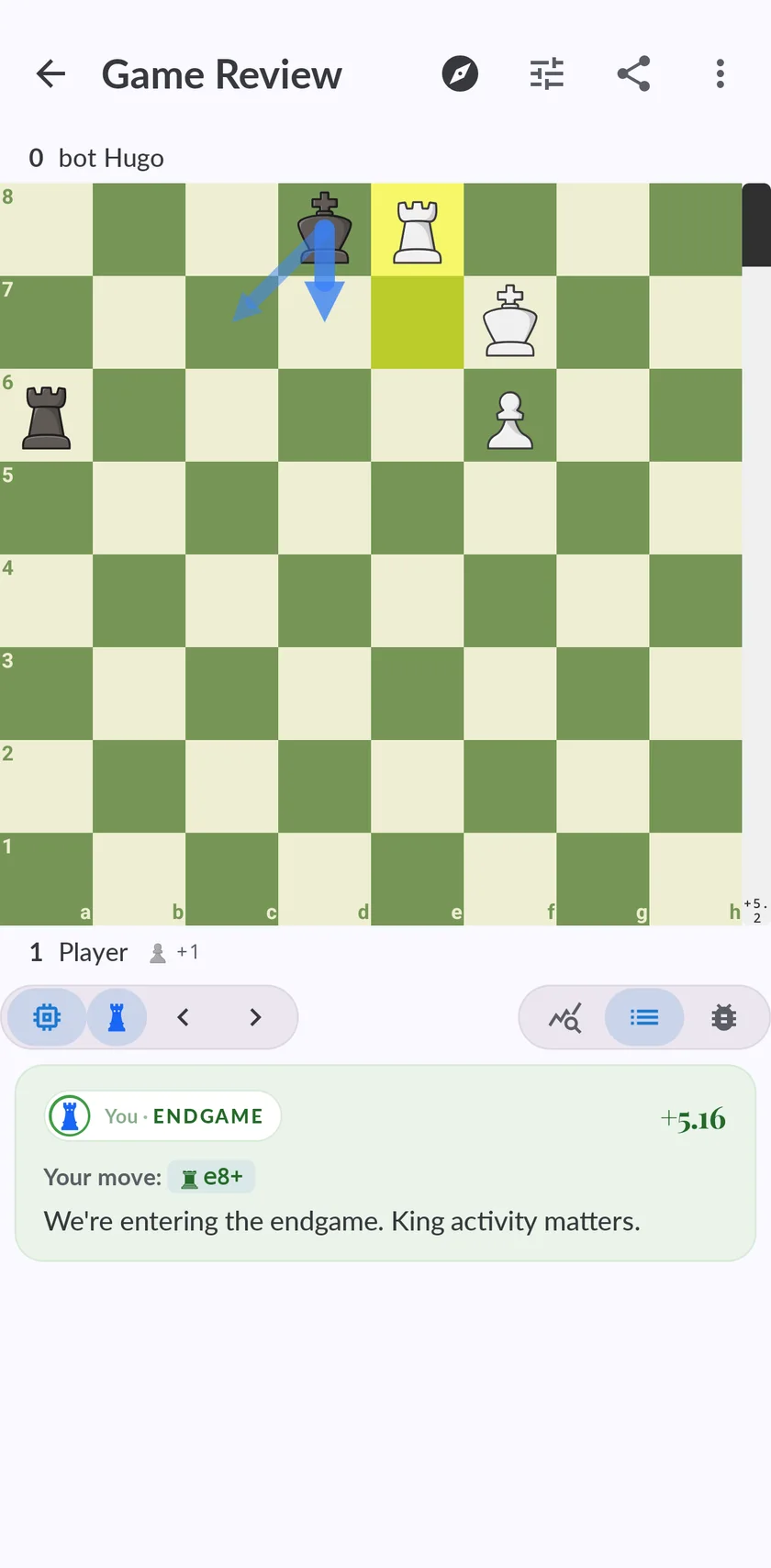
A comment on every move you step through
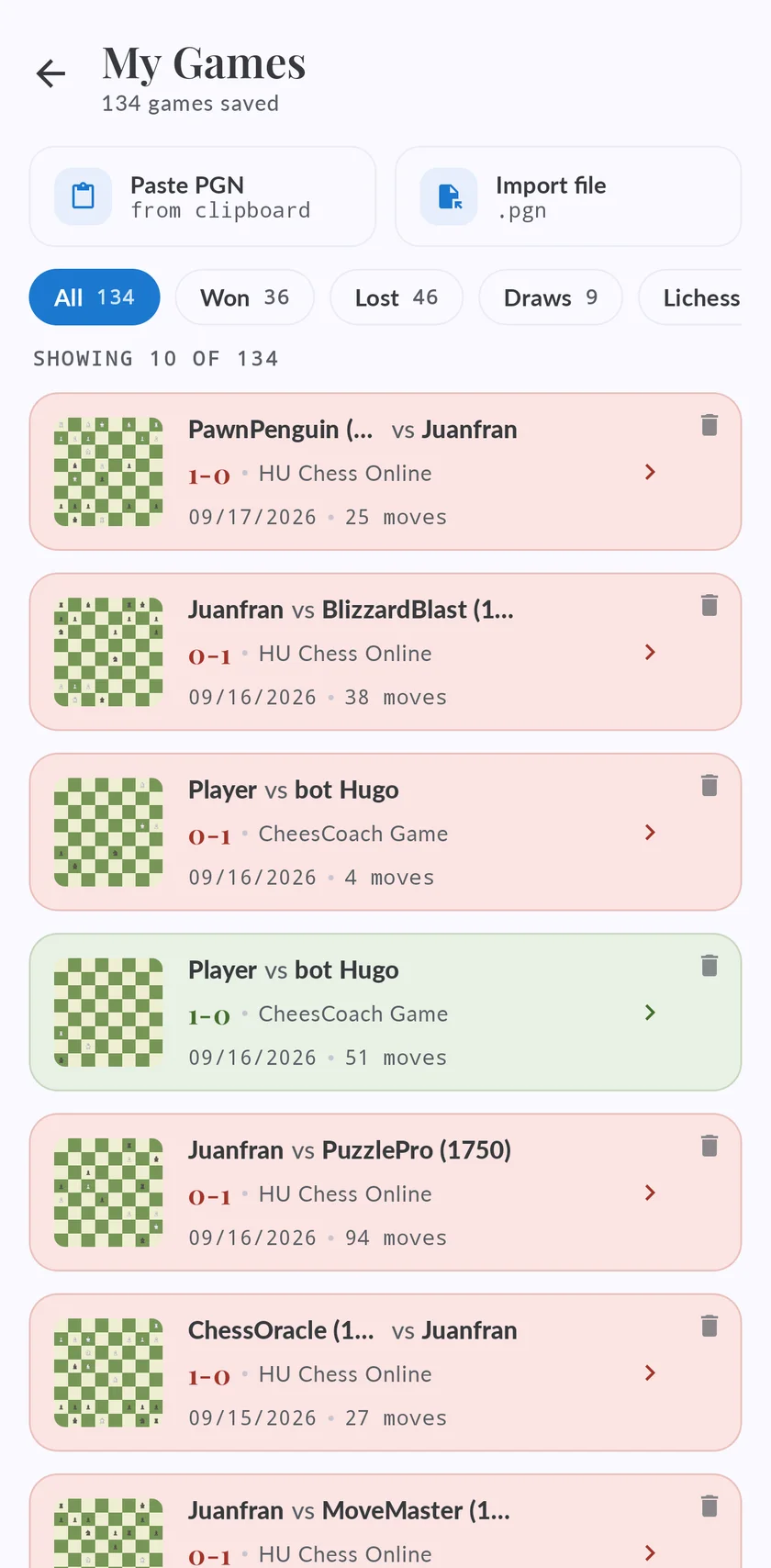
Your games, plus everything you import
Not a pile of exercises. Three labs, one for each phase of the game, each with the same shape: learn the idea first, then play it out against an opponent that will punish you for getting it wrong.
The three labs are Premium. The Italian Game in the opening trainer, and the first middlegame exercise, are free.
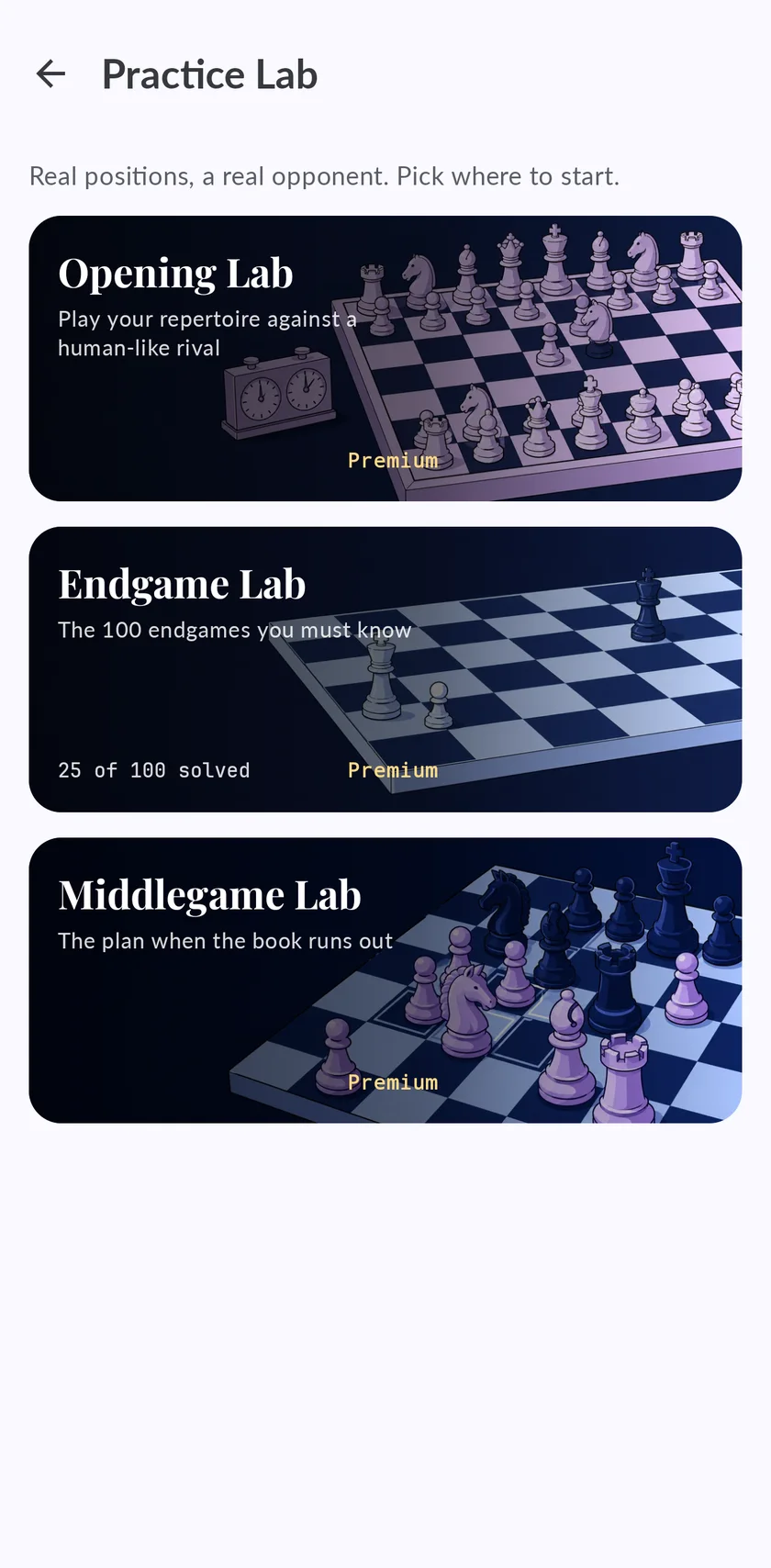
I — The opening
Pick the openings you actually play. The trainer drills the moves with spaced repetition and tells you when a line is due for review. Then you play the same line out against Maia, a network trained on real club games, so it goes wrong the way humans go wrong.
The moves of your repertoire, drilled until you stop thinking about them.
Spaced repetition, three stars per linePlay the line for real against a rival that moves like a club player.
Maia networks by strength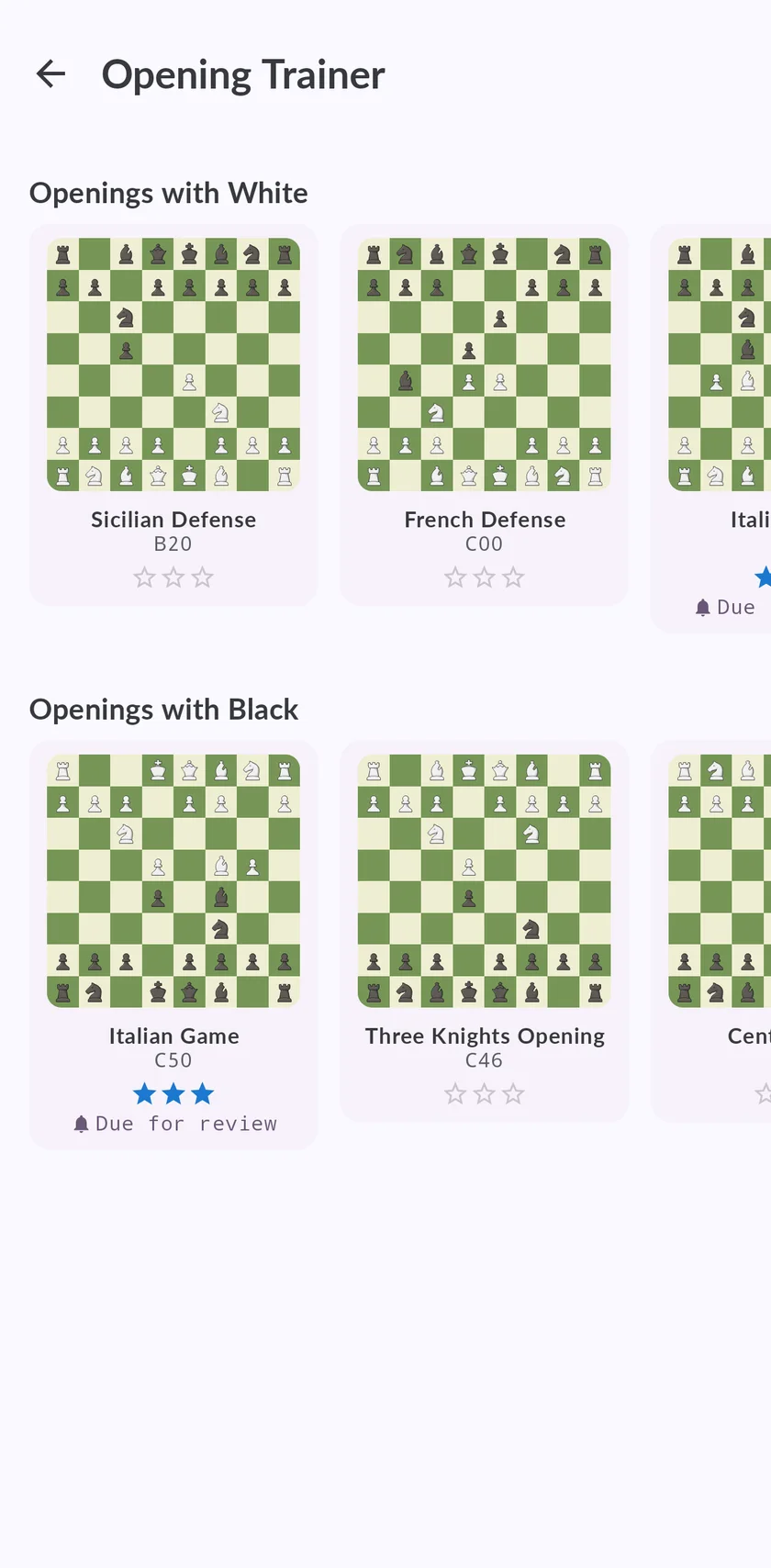
Your repertoire, by colour
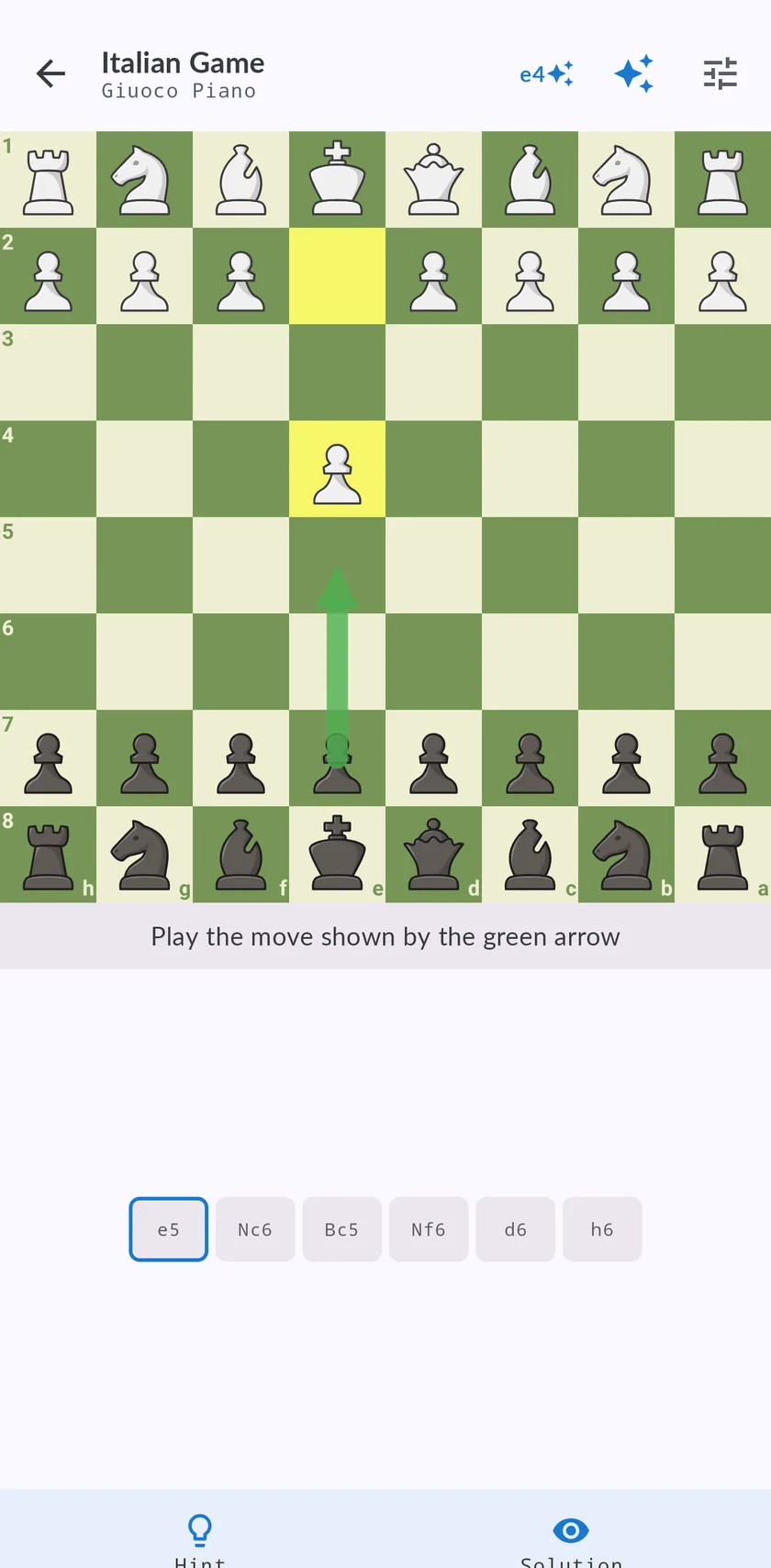
Play the move, not the theory
II — The middlegame
Move fifteen, the theory is over and nobody taught you what to do next. The Middlegame Lab goes by pawn structure: the Carlsbad, the Benoni, the French chain and twenty-two more, each with its theory, the plan for both sides, and positions from real games where you name the structure and then carry the plan out.

Each structure with its theory, the plans of both sides, and a question to check you read it right.
25 structuresName the structure, say where the game is going, then play the plan out with a move budget.
1000 positionsWritten and playable. The app still shows it as coming soon, and that is the truth: it opens once the first exercises have been through a round of testing.
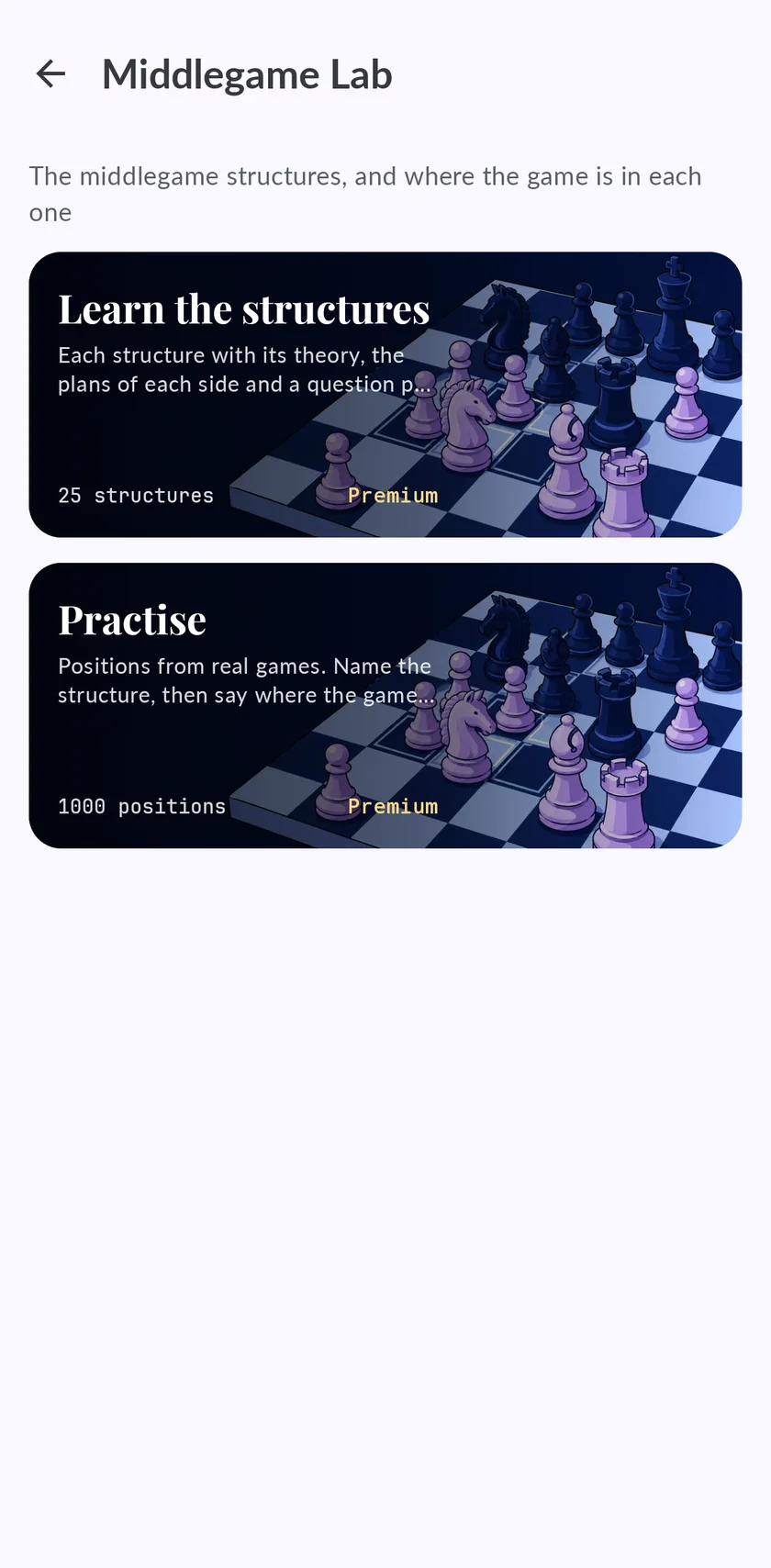
Learn it, then play it
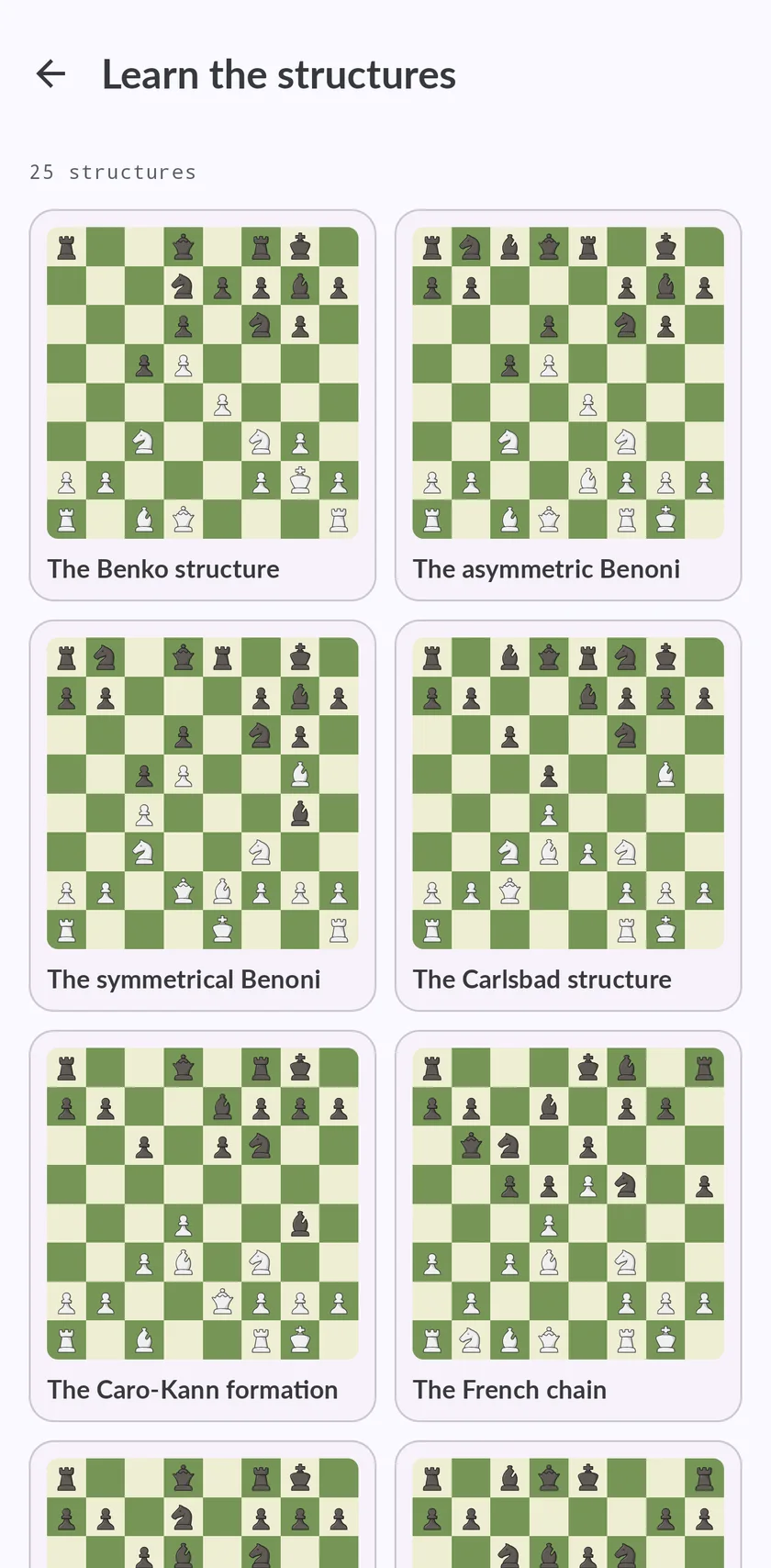
Benko, Benoni, Carlsbad, French chain
III — The endgame
Position by position: the goal, the technique in four lines, and then you play it against an engine at full strength that will not slip. Some you have to win, some you only have to hold. Guided mode warns you the moment a move throws the result away.

King and pawns, rooks, queens, bishops and knights, each family in order of difficulty.
100 endgamesA fresh position every time, drawn from real games. Win some, hold others.
45 000+ drills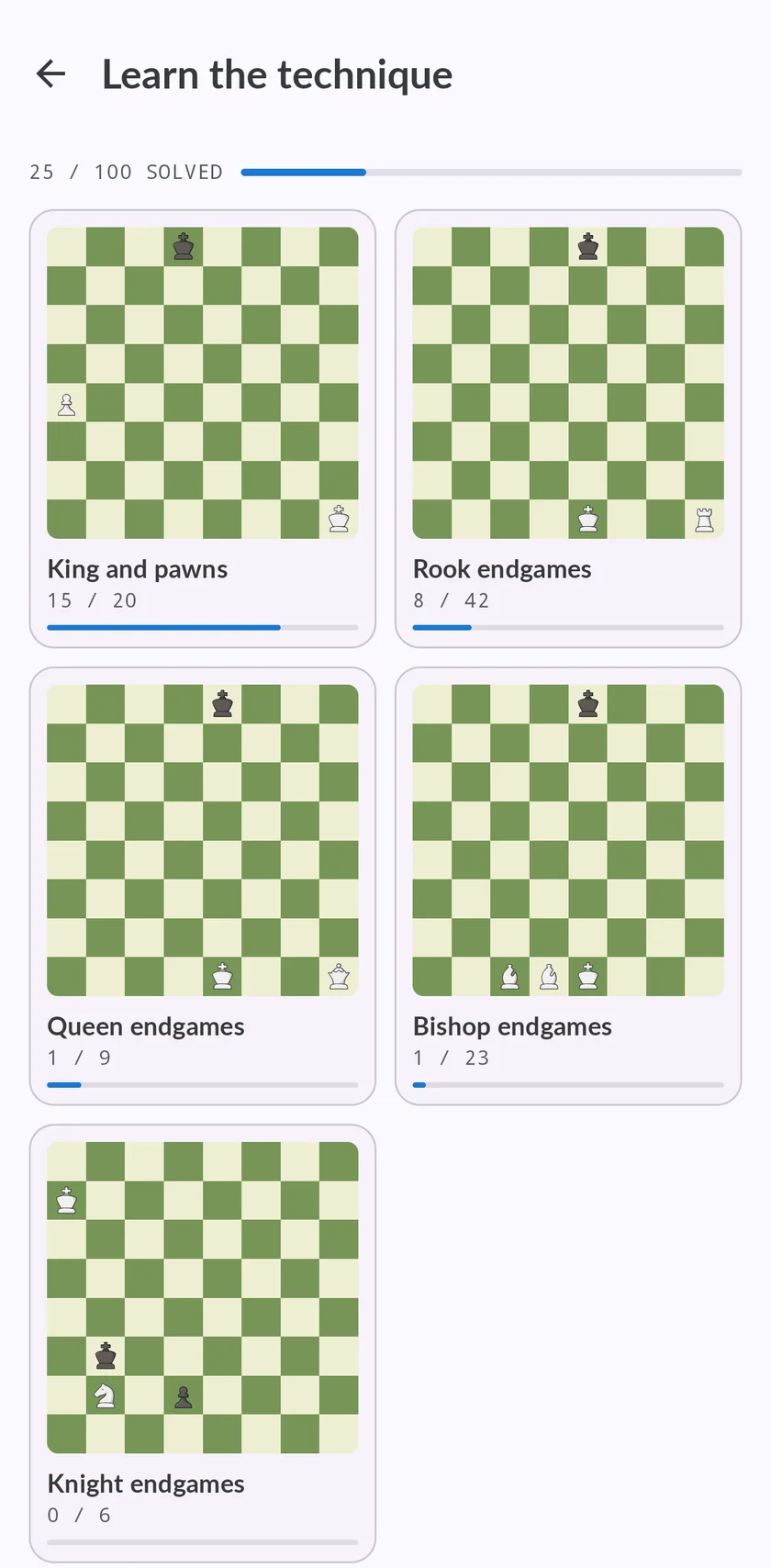
Five families, twenty-five solved
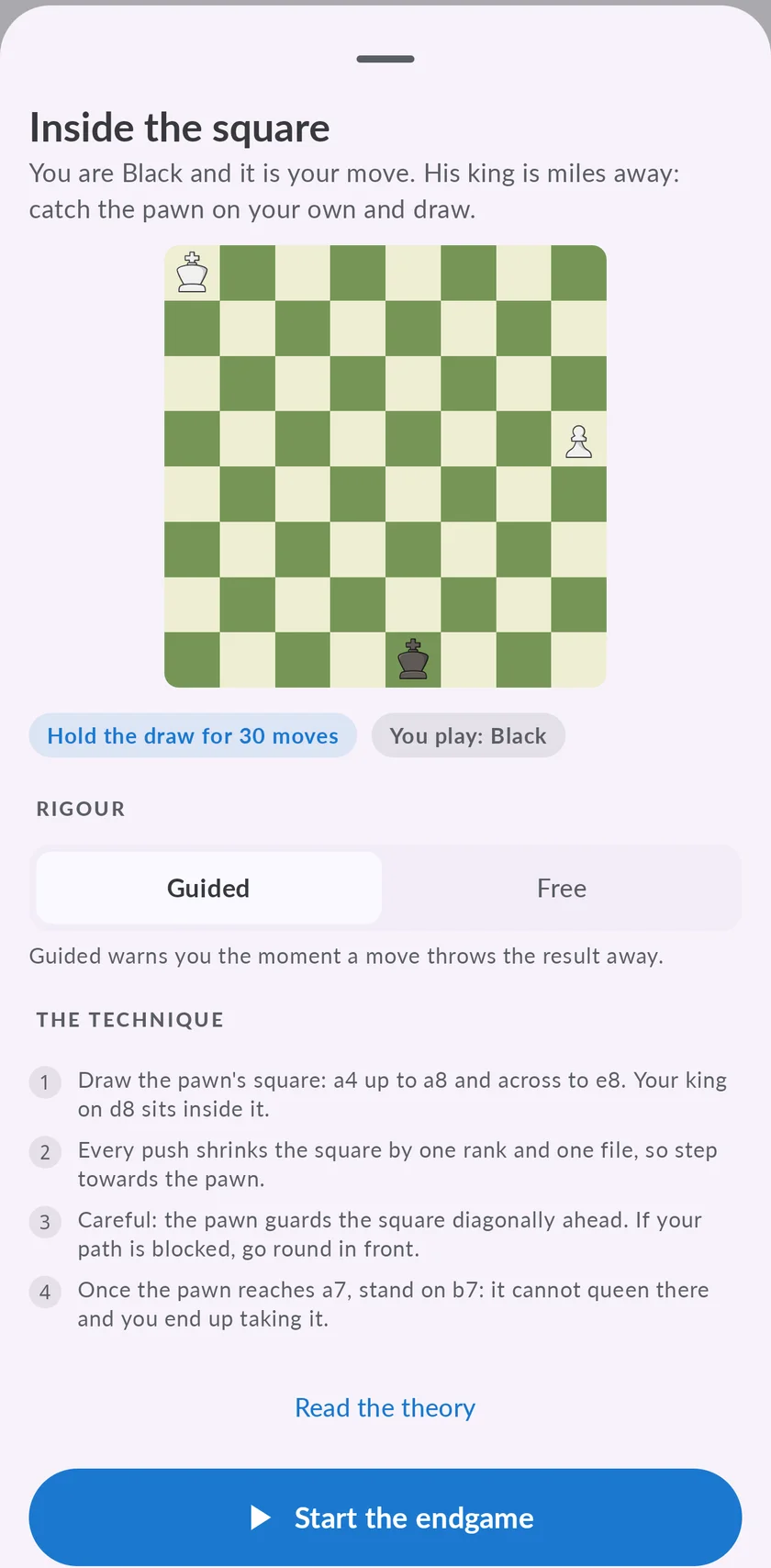
The goal, then the technique in four steps
A ladder of guided courses, 164 lessons so far, each one a mix of theory, puzzles, an opening to learn and a game against a bot you have to win to move on. The first level teaches the rules from scratch and is free.
How the pieces move, checkmate, what a plan is.
29 lessons, freeTactics and the first openings worth knowing.
44 lessons, 0–1000Strategy, structures and the endgames that decide games.
91 lessons, 1000–1500Calculation and long plans.
1500–2000, coming soon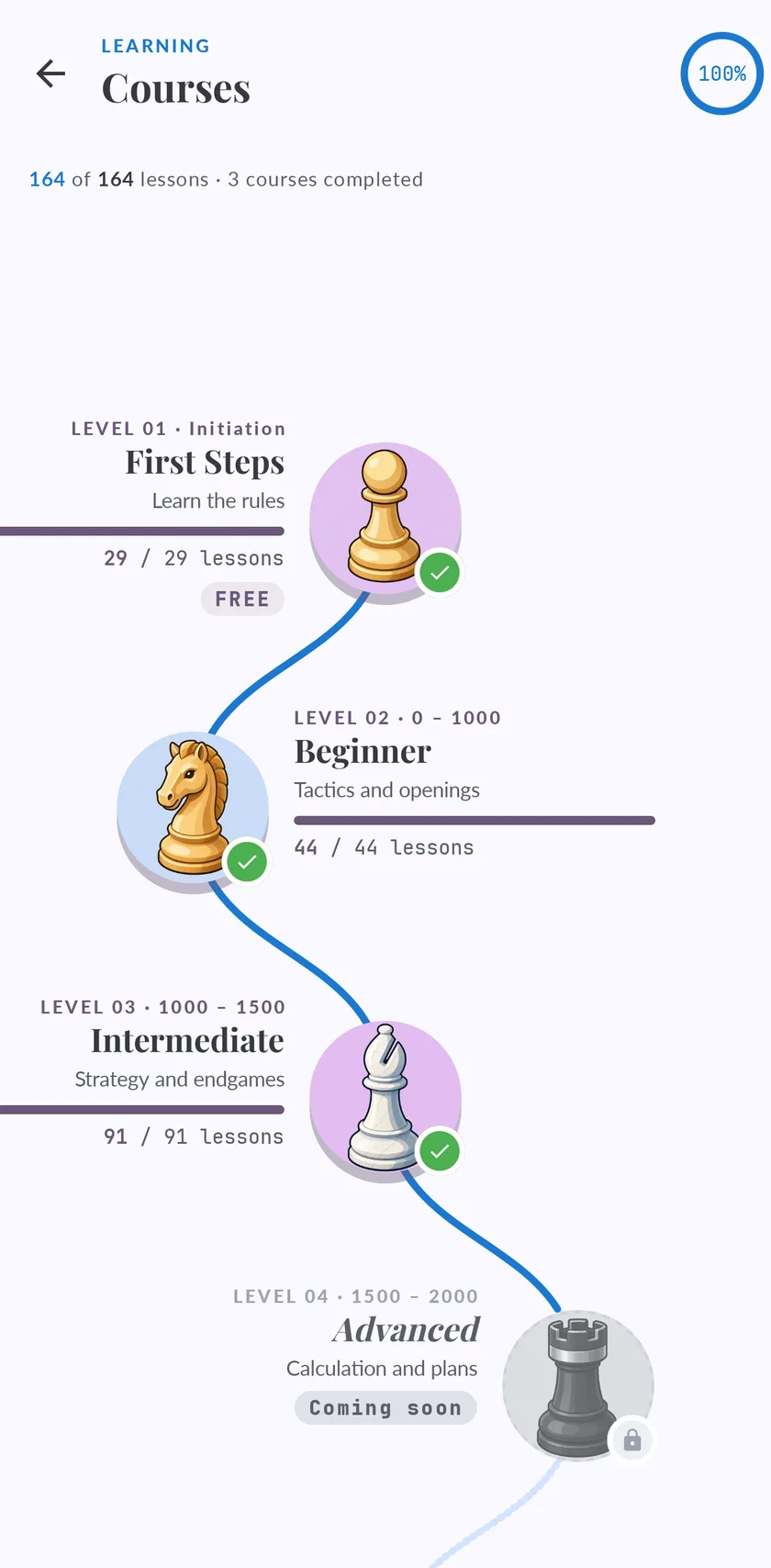
One path, one lesson at a time
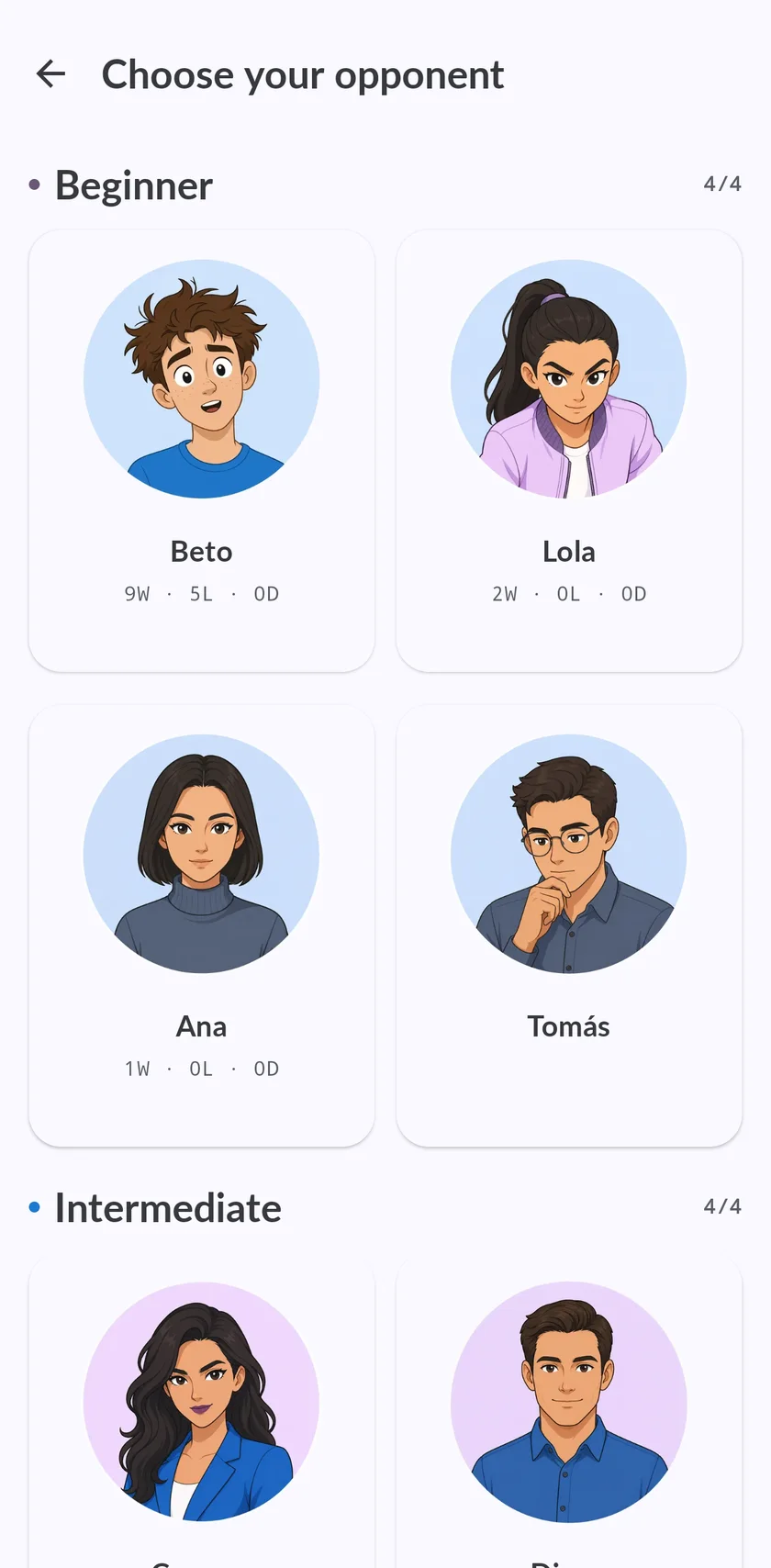
Twenty rivals with faces and ratings, from a beginner who hangs pieces to a grandmaster who doesn't. Real people online. Puzzles when you have three minutes. A board to analyse anything you like.
Five levels, four opponents each. They blunder like the rating on their card.

Chess and Go online, with a clock, a rating and a monthly ranking.
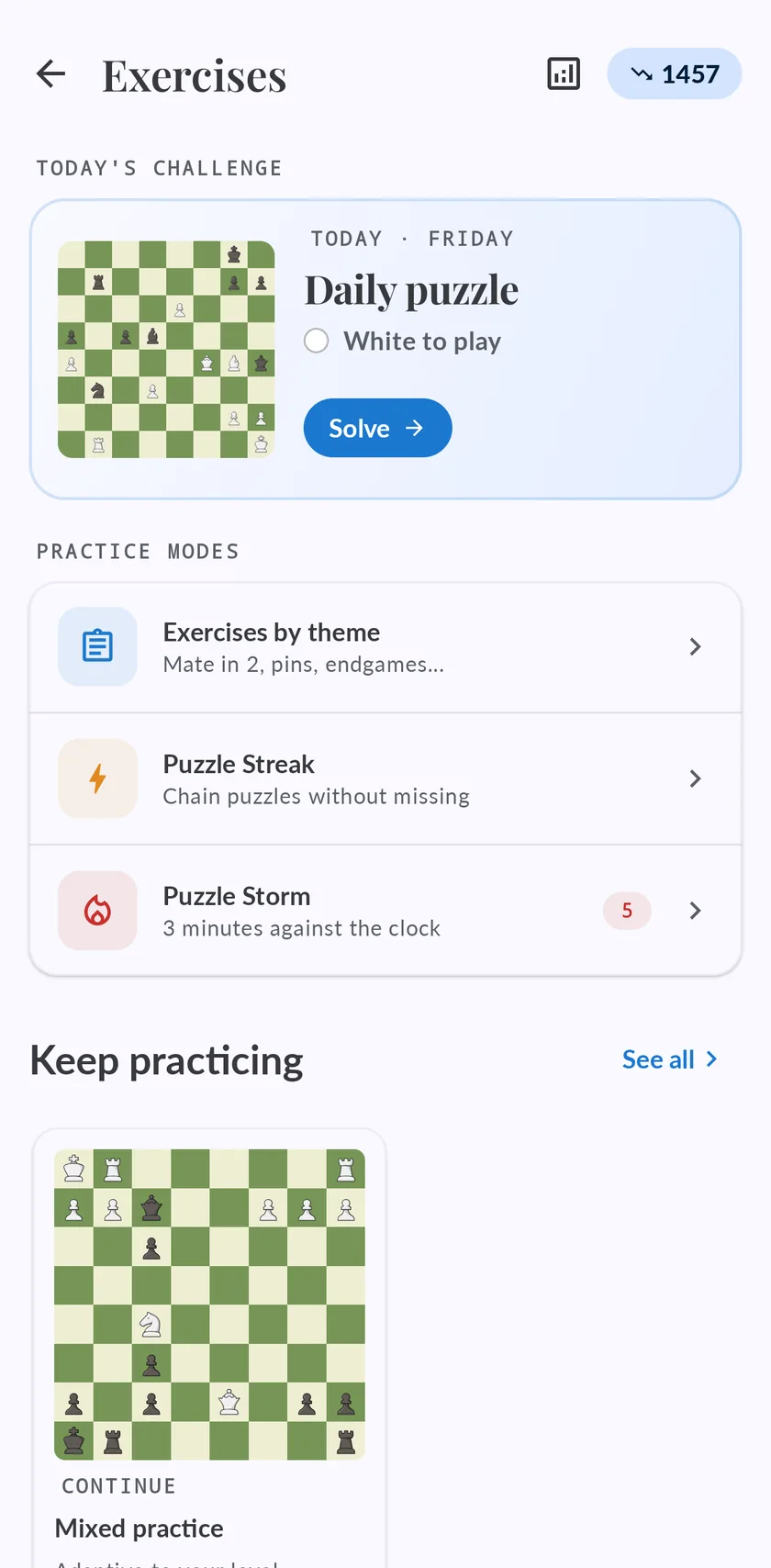
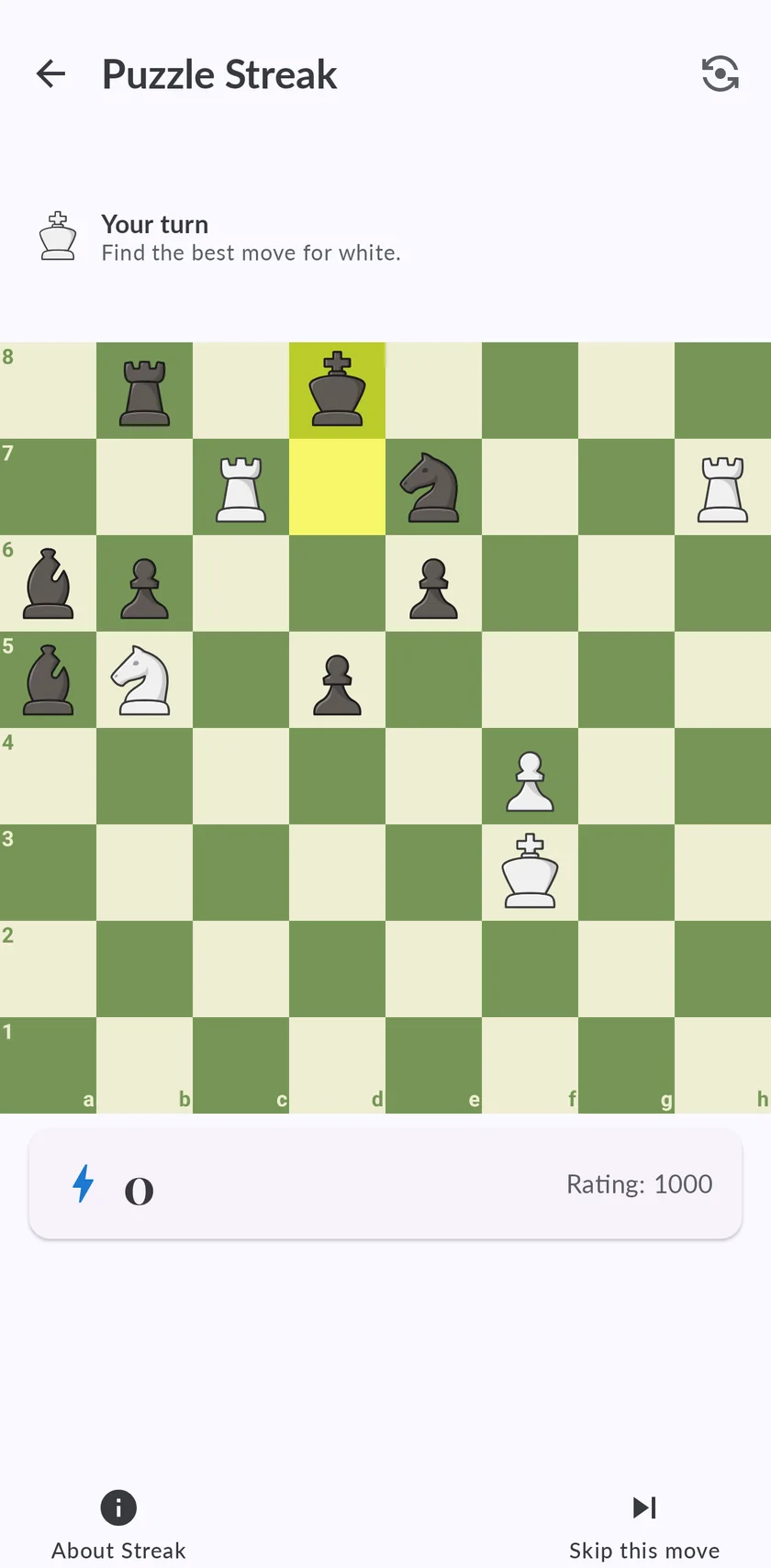
A daily one, by theme, a streak to keep alive and a three-minute storm.
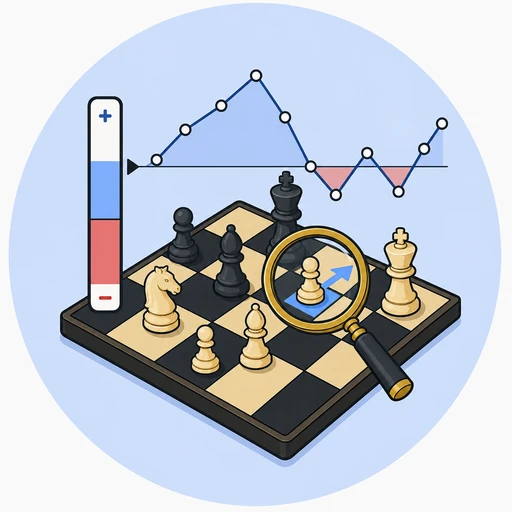
Set up any position, get the engine lines, ask the coach what it means.
Judging a position, playing like a person and fitting inside an iPhone are different problems. They run on your device, not on a server, so analysis works on the underground with no signal.
The one that judges
On Android it runs on the phone as its own process, with its neural evaluation. It is what marks your blunders, draws the evaluation graph and finds the move you missed, and it is what the strongest rivals play with.
The one on iPhone and iPad
Not a whim. Stockfish is GPLv3 and iOS does not let an app start a separate process, so linking it inside the app would put the whole app under that licence. Caissa does the same job under a licence that lets it live in there, and it analyses and plays on the device just the same.
The one that plays like a person
Not a strong engine turned down. Each level is a different network trained on real games by players of that strength, so it goes wrong where people go wrong and plays the move a club player of that rating would actually pick. It is the rival in the Opening Lab.
One more, for honesty: below about 1300 the official Stockfish cannot be made weaker — its weakest setting still plays at roughly 1320. The beginner rivals run on Fairy-Stockfish instead, which can, so a bot labelled 800 loses the way an 800 loses rather than by throwing a piece at random.
The engine runs on your phone. The explanations come from a language model, and you choose how you pay for that: credits inside the app, or your own API key with one of five providers, billed by them at cost.
Buy a pack and forget about it. Free calls to start with, so you can see what the coach sounds like before paying anything.
Paste an API key and the app talks to that provider directly. Typical cost of a full game review is a fraction of a cent.
Keys are encrypted on the device and never leave it except to reach the provider you chose. No ads, no trackers, no selling anybody's games.
Stockfish, Fairy-Stockfish and the Maia networks are GPL and run on the device. The sources and the exact builds are published.
Start free on iPhone, iPad or Android. No ads, and no subscription needed to play, analyse or take the first course.
Sign in and your games, ratings and progress follow you to the other device.
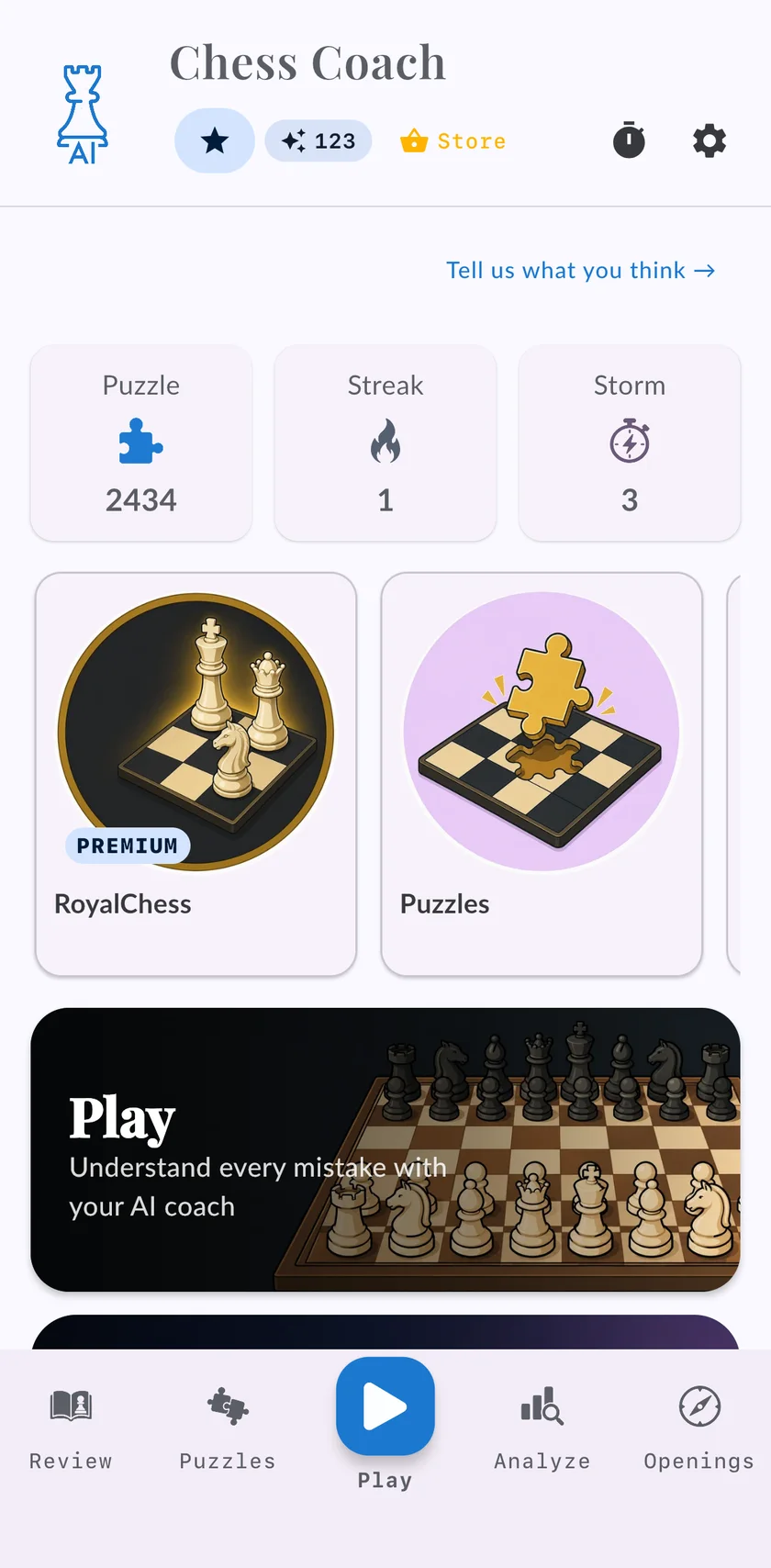
The home screen, on an iPhone. Same app on Android and iPad.